Lawyer skewers CYFD chief over lack of progress
By Esteban Candelaria
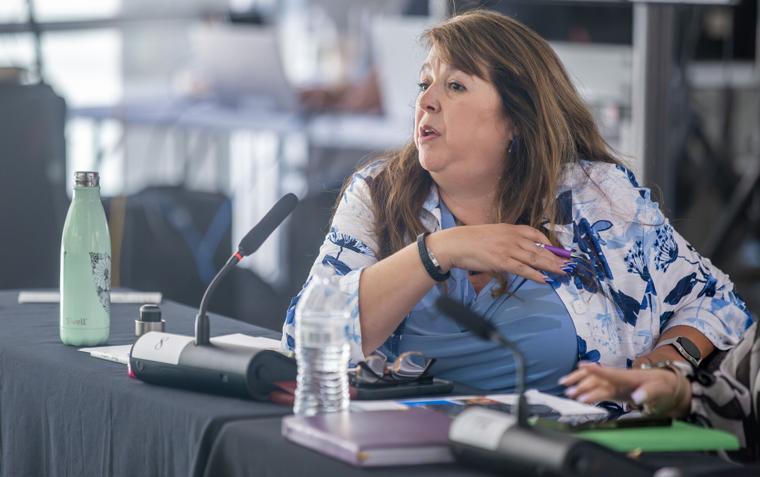
A lawyer for plaintiffs seeking to force improvements to New Mexico’s treatment of children in its care grilled New Mexico Children, Youth and Families Cabinet Secretary Teresa Casados at a hearing on the progress the troubled agency has made under her watch.
Casados was the final witness in the state’s case, called Friday in weekslong arbitration proceedings centered on New Mexico’s compliance with a landmark settlement agreement reached in 2020 in the class-action Kevin S. lawsuit. The agreement laid out a number of goals for reform for New Mexico’s child welfare system. A later corrective action plan, also at the center of arbitration, aimed to bring the state back on track with the settlement agreement.
The proceedings have gone on for two weeks and have featured testimony from figures including the head of the Legislative Finance Committee, Health Care Authority Cabinet Secretary Kari Armijo and a child psychiatrist who said that, despite the terms of the settlement demanding an end to the practice, New Mexico is still sending some high-needs children out of state.
Plaintiffs argue the state has failed to comply with both the settlement and the corrective action plan. A hiring freeze imposed in May 2023, they say, exacerbated the agency’s woes in recruiting and maintaining a stable workforce. An annual report about progress on the settlement released last week by independent field experts tracking the state’s progress found the state in 2023, when the plan was active, met just two of the 39 target outcomes. The plaintiffs want to force the state to take action to address the problems with the state’s child welfare system, according to their amended notice of arbitration.
Casados: CYFD wants to meet challenges
In her testimony, Casados said her understanding was that the experts tracked the state’s good-faith efforts to meet the targets in the settlement agreement — in her words, “not necessarily whether the targets were reached, but whether the efforts were moving the agency forward in an attempt to reach those targets.”
She characterized the hiring freeze as a “pause” she put in place to get a handle on budget issues in the department. She acknowledged failing to communicate this to the field experts.
“My charge was not to come in and manage the Kevin S litigation. My charge initially ... was to come in and organize a department structurally which we felt was not functioning,” she said.
She also noted the external challenges CYFD faces in coming into complete compliance with the settlement, particularly within four years of its signing, but said her staff is dedicated to doing so.
“I know they want to meet these goals,” she said.
Attorney F. Michael Hart, however, focused on the state’s struggles during the time the corrective action plan was active and said the targets in the settlement agreement were laid out as deliverables that needed to be fulfilled.
“When parties talk and set forth dates and deadlines for things to be done, it’s not trivial; it’s not insignificant,” he said. “It’s because the children who are depending upon these services are incredibly vulnerable and need these things to be done so that their futures can be somewhat better and somewhat less chaotic.”
Before arbitration, both parties agreed to a 14-day timeframe to submit written closing arguments and other findings and conclusions to arbitrator Charles Peifer, according to CYFD spokesperson Jessica Preston. After that deadline, Peifer has 30 days to issue a decision. At the end of testimony, the parties indicated that plan may change, though it wasn’t clear if it had as of Friday evening.
Sen. Crystal Brantley, R-Elephant Butte, put out a statement Friday criticizing the department and calling on CYFD to “come forward with concrete requests and legislation” to come into compliance with reforms laid out in the settlement. She and other lawmakers have frequently been critical of the agency are expected to take up issues related to the department and child welfare when the 60-day legislative session starts in January, including possible changes to CYFD’s oversight.
“The department under Secretary Casados spends more time spinning its failures than striving to meet their legal obligation to reform the agency,” Brantley said. “This department continually takes a back seat on the Governor’s priority list and today’s floundering testimony has, unfortunately, become par for the course.”
‘They haven’t even come close’
Hart asked Casados about several measures the state has put in motion to address sections of the settlement and corrective action plan but which weren’t fully implemented before the plan expired. Those include efforts to implement a new child welfare information system — which would make information available in real time and tracking cases easier for workers — and to co-locate Presbyterian Health Plan care coordination services at CYFD offices to better facilitate well-child visits for children entering state custody.
The information system has a tentative release date of November 2025, and the co-location plan is still largely in the works, Casados said. The corrective action plan expired Jan. 5.
But Hart said the settlement agreement and the corrective action plan negotiated for tangible accountability — deliverables and deadlines.
“The lion’s share of the target outcomes have not been met, and they haven’t even come close,” he said. “What do we do now? ... Do we go back five years to 2020 and renegotiate? Or do we look forward and say, ‘This is what’s going to happen now, this is how we’re going to do it from now on, and we’re going to make sure it gets done?’ ”
en
2024-11-24T05:45:00.0000000Z
2024-11-24T05:45:00.0000000Z