State says it has made progress on wellness checks for kids in CYFD custody
By Esteban Candelaria and Gabrielle Porter ecandelaria@sfnewmexican.com and
Fewer and fewer children in New Mexico entering state custody have received mandatory wellness checks on time, according to a recent report from field experts in the landmark Kevin S. lawsuit.
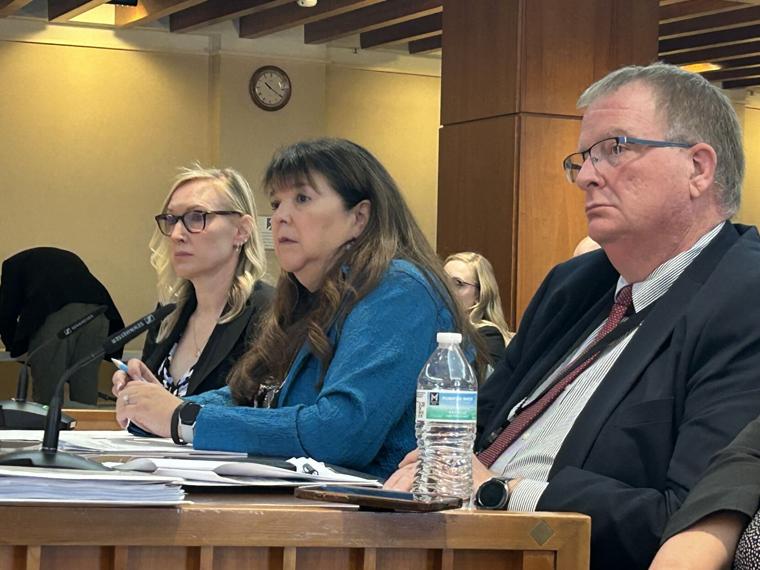
A new contract with Presbyterian Health Plan is supposed to make it easier for those children to get that care while also collecting better data on why the state is not performing the wellness checks. But in practice, there are still some gaps, according to Monday testimony during an arbitration hearing in the Kevin S. case.
Lagging timely completion rates of the mandatory wellness checks has become a central issue in the state Health Care Authority and Children, Youth and Families Department’s return to arbitration in the Kevin S. settlement, an agreement reached in 2020 that laid out a number of goals for reform of New Mexico’s troubled child welfare system.
Since 2019, the percentage of children in state custody receiving wellness checks on time has steadily declined. While 46% of children got them on time last year, a slight uptick from the year before, 58% of them did in 2019.
During testimony Monday night, Health Care Authority Cabinet Secretary Kari Armijo said she thinks the state has "made a lot of great progress" on children receiving the visits, noting a spike in October 2023 in which 75% of children got them on time.
But she also said she doubted New Mexico would ever reach the point where 100% of children receive the checks on time, noting multiple barriers in the lives of families and children.
"I don't think it's not achievable to get closer," she said. "... I don't think 100%, as a strict liability, would be possible, but I do believe that we can get that number higher."
During her own testimony, Health Care Authority Medicaid Director Dana Flannery said as of this year, the state is starting to get more nuanced reports from Presbyterian Health Plan in an effort to get a better pulse on why and how it’s missing that window so often.
Presbyterian, which got an exclusive state contract to be the sole provider of Medicaid benefits for children and teens in CYFD custody starting earlier this year, is now issuing quarterly reports to the state that give a more detailed accounting around what happened with each fumbled appointment.
Flannery said explanations might include kids who were scheduled but weren’t brought to their appointments; guardians whom Presbyterian’s care coordinators couldn’t get in touch with; young people who came into state custody but quickly exited it; and those who “voluntarily” made appointments outside the 30-day window, maybe in an attempt to keep the child with their existing doctor.
Flannery said the new system should allow leaders to know how often something unavoidable gets in the way — such as a foster parent with a flat tire — versus the state or insurance company dropping the ball.
“That really helps me analyze if they as a health plan are doing their job,” Flannery said.
The arrangement with Presbyterian is new this year. In the past, kids in CYFD custody might have been enrolled at any of the state’s “managed care organizations,” private insurers that hold state contracts to manage Medicaid for most patients in the state.
State leaders have said they hope the new arrangement will make it easier to get health care for those children and to track when and how kids are falling through the cracks.
Flannery said Presbyterian’s first report, which covered July to September of this year, showed about half or more of the kids entering state care didn’t get their appointments.
“We had a lot that did not show,” Flannery said.
Arbitrator Charles Peifer questioned whether Presbyterian’s health reports might be skewed.
“Are you worried that the report is coming from Presbyterian ... [where] there may be a certain self-interest in how they categorize reasons for not scheduling within 30 days?” he asked.
Flannery said she is optimistic the insurance company is giving an accurate reckoning. The new reports list the specific categories, she said, and the state will have the ability to check them as well.
“After a six-month run-out of claims, we could do a claims audit to see, are we apples to apples?” she said.
Peifer also noted some of the deadline misses may be a result of New Mexico's well-documented shortage of medical providers.
“Anecdotally, I think everybody in this room probably knows that you can't just walk into your doctor's office in New Mexico,” he said. “... We are not even tracking whether provider availability is the reason.”
Flannery acknowledged a recent Presbyterian quarterly report identified provider availability as a barrier to providing well-child visits, but the report did not document any instances in which a wellness check wasn’t conducted because of a lack of providers.
Flannery noted that, anecdotally, she rarely hears about provider capacity being the main reason wellness checks don’t happen on time.
"What I'm hearing more of is life, difficulty wrangling all the humans for something so quickly, and then again, if you look at hierarchy of needs and what's going on with these kids, [and] 'Does this rise to the absolute top?' ” Flannery said.
When asked by plaintiffs' attorney Tara Ford what she would do if Presbyterian doesn't increase its delivery of wellness checks in the next quarter, Flannery said she would refer to a remediation plan in place and consider a corrective action plan for Presbyterian or other sanctions.
"That's the other reason for really digging into the data and looking at what is within their locus of control and what is outside their locus of control, because what I hold them accountable to is what's within their locus of control," she said.
en
2024-11-20T06:15:00.0000000Z
2024-11-20T06:15:00.0000000Z