New Mexico lawmakers seek solutions to federal cuts amid government shutdown
By Clara Bates and Nathan Brown cbates@sfnewmexican.com
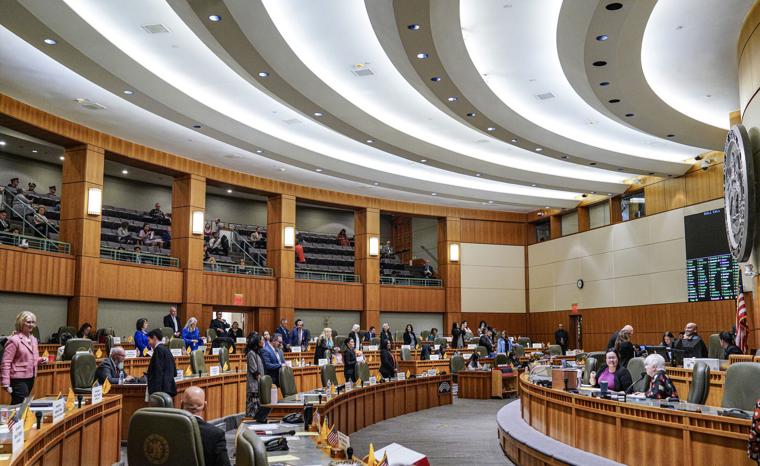
Against the backdrop of a federal government shutdown over a health care spending stalemate, Democratic leaders in New Mexico on Wednesday kicked off what's expected to be a swift special legislative session designed to protect residents from federal safety net cuts.
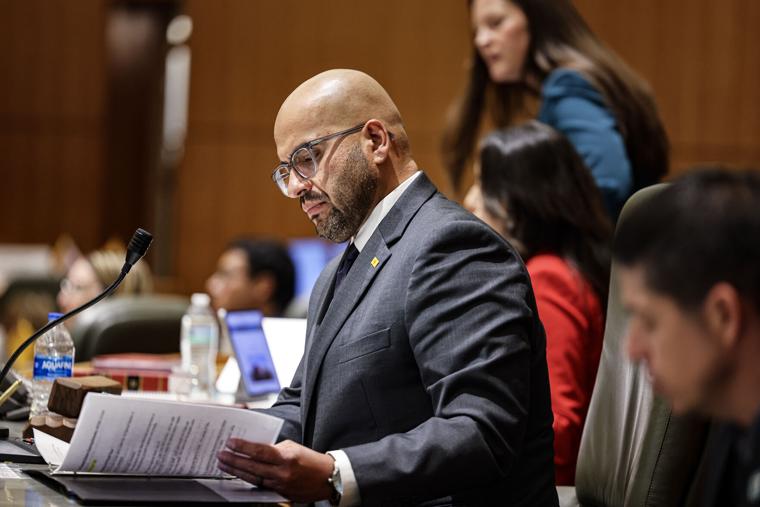
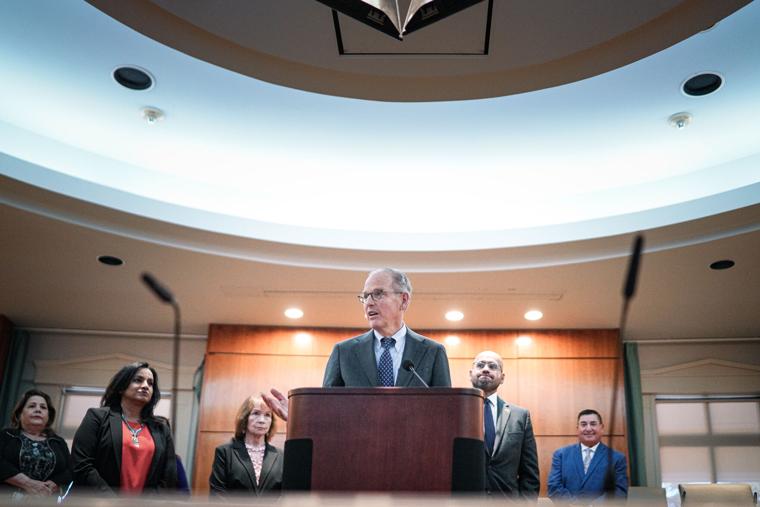
"While dysfunction in Washington, D.C., grinds the federal government to a complete halt, we are here today to step up for our friends and our neighbors all across the state," said House Speaker Javier Martínez, an Albuquerque Democrat, during a morning news conference before the session began.
The House sent the first measure — a $160 million spending plan aimed at filling expected gaps from federal funding cuts to health care programs, food assistance and public broadcasting — to the Senate late Wednesday following a 43-24 vote, mostly along party lines.
House Bill 1 also includes up to $240,000 to pay for the session, based on an estimate of a three-day event, Senate Democratic spokesperson Chris Nordstrum wrote in an email. Lawmakers hope to wrap up Thursday.
Late Wednesday, the Senate was debating HB 1 while the House was debating House Bill 2, which would replace federal subsidies set to expire for many people who enroll in health care coverage through the state's insurance network.
Republicans questioned whether the issues on Gov. Michelle Lujan Grisham's call for the session couldn't wait another three months, when the Legislature will convene for the 2026 regular session. They also expressed frustration over not being included in deliberations over the proposed legislation and argued other "real emergencies," such as a need to reform the state's medical malpractice law, should have been addressed instead.
“This special session is a critical first step to mitigate the harms facing New Mexicans,” Senate Majority Leader Peter Wirth, D-Santa Fe, said on the Senate floor just after the session's noon start. “We’re not going to sit back and let our health care system, our food support system, be devastated.”
New Mexico is likely to be particularly hard-hit by federal funding cuts Republican President Donald Trump signed into law in July as part of the budget reconciliation bill, which calls for steep cuts to Medicaid and the Supplemental Nutrition Assistance Program.
There are over 807,000 New Mexicans enrolled in Medicaid, and 88,000 could lose coverage under the federal Medicaid cuts, the state Health Care Authority has estimated. Medicaid provides health coverage for 38% of the state’s population — the highest per capita enrollment rate in the nation. And over 459,000 New Mexicans were enrolled in food assistance through SNAP as of August — about 20% of the state's population and also the highest per capita rate.
At the same time, the state is in a position to act, Democrats said, because of its millions of dollars in reserves, primarily from oil and gas revenue.
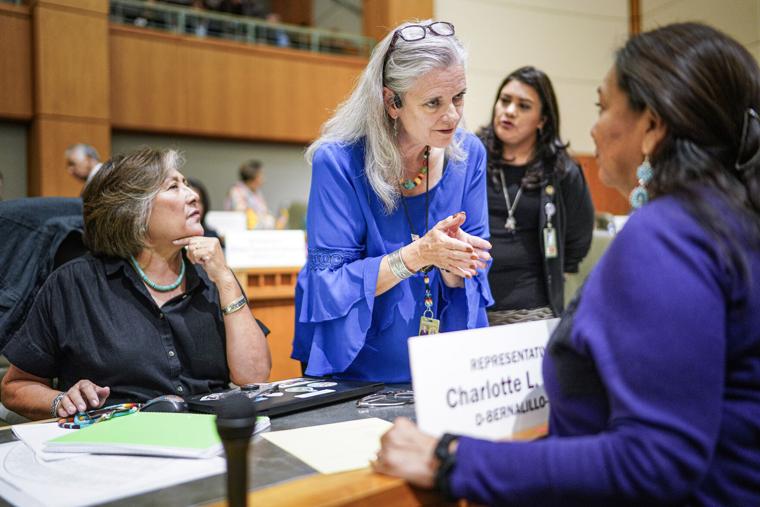
"We have funds that are intended for these moments exactly in the history of our state," said Rep. Sarah Silva, D-Las Cruces. "Right when … bad things happen, we're able to be more resilient."
'We don't need to be here'
From the start, Democrats and Republicans were divided on whether the special session was necessary.
Republicans argued the session was anti-Trump political theater in reaction to cuts that largely won’t take effect until 2027 at the earliest.
Senate Minority Leader Bill Sharer, R-Farmington, said the special session is “based on the possibility that something might happen that isn’t happening.”
“We don’t need to be here now for that,” he added.
At a House Appropriations and Finance Committee meeting Wednesday, Rep. Rebecca Dow, R-Truth or Consequences, grilled committee Chair Nathan Small, D-Las Cruces, on various points in HB 1 she argued were either in reaction to cuts that won’t take effect for more than a year or are unrelated to the federal spending bill.
“I just have to remind people we’re having a special session with an emergency declaration blaming Donald Trump,” Dow said during a discussion on a section of the bill addressing interstate health worker licensing compacts. “… This has nothing to do [with it], and it didn’t require a special session and doesn’t need a study.”
Small said some of the federal cuts — such as the expiration of "enhanced" health insurance premium tax credits for self-employed workers and others purchasing insurance through New Mexico's BeWell exchange — will take effect sooner. The tax credits are set to expire by the end of the year.
He acknowledged other cuts, such as those to Medicaid programs, won't happen until later but said the state should start preparing.
“Every one of the dollars we’re looking at appropriating here, where it goes, it’s going to start doing good as soon as this bill is signed,” Small said.
'Drastic' insurance increase
Democratic leaders have pointed to the looming expiration of the federal health insurance subsidies as among the most serious short-term concerns motivating the emergency session.
The cuts to subsidies known as enhanced tax credits would threaten the health coverage for more than a quarter of some 75,000 New Mexicans who purchase insurance through the exchange, the state has estimated. Small said a household of two in Taos County making $95,000 a year would see monthly premium costs skyrocket from $150 to $2,845.
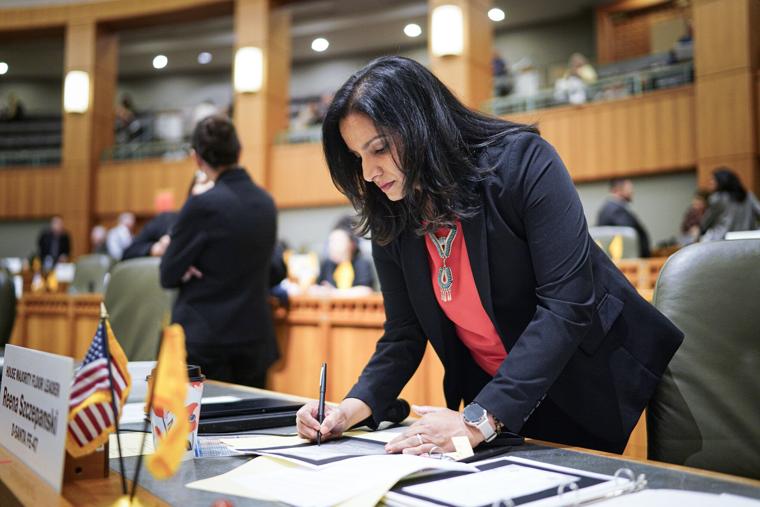
“For some working families, this drastic increase may mean less money to put food on the table, or even forgoing health insurance in order to pay rent,” said House Majority Leader Reena Szczepanski, D-Santa Fe.
The proposal debated Wednesday would infuse $17 million in state funds to extend those credits, which were first introduced in the American Rescue Plan Act of 2021 and then extended through the Inflation Reduction Act of 2023. They were intended to lower out-of-pocket premium costs, providing subsidies for middle-income patients and increasing subsidies for lower-income patients.
Regular tax credits for the lowest-income patients who enroll in coverage through the exchange are not expected to end.
Republicans objected to several things about HB 1, particularly $3 million to "contract for health care services provided by nonprofit health care facilities not eligible under federal law to receive Medicaid funding." Small told his committee some of the money could go to Planned Parenthood, among other providers.
“I believe we are all sons and daughters of a loving heavenly father," said Rep. Mark Duncan, R-Kirtland. "And I will not give money to kill his kids."
The insurance subsidies are at the center of the federal fight that led to Wednesday's government shutdown, with congressional Democrats pushing to keep funding for them.
Szczepanski said it would be "great news" if the federal government ends up extending the enhanced premium tax credits because then state lawmakers could target funds at other health care gaps. But absent that clarity, the state needs to take action.
“We want New Mexicans to know, regardless of what happens in Washington, D.C., your state lawmakers are looking out for you,” she said.
Left for regular session
The agenda for the special session, although ambitious, is scaled back from some earlier discussions.
When the Senate gaveled in, Republicans offered up several bills on child welfare, juvenile crime, overhauling the medical malpractice law and joining interstate medical licensure compacts, all of which were referred to the Senate Committees' Committee and are unlikely to see further action during the special session.
Lujan Grisham's office also floated the idea earlier this year of adding a ban on immigrant detention centers to the special session call, but instead opted to wait until the regular session. There are immigrant detention centers in Otero, Torrance and Cibola counties.
Wirth said other priorities, including road funding and medical compacts, were left off the agenda because they need more work.
“We are going to pass a road package in the first 15 days of the January session,” he said.
Wirth said lawmakers have received “loads of emails and inputs” calling for medical compacts, which the Legislature is also expected to consider during the regular 30-day session, which starts in January.
“We understand the need to pass the medical compact,” he said. “Leadership in the House and Senate and the governor agree and have committed to doing the necessary work on this issue during the remainder of the interim so we can present a consensus bill during the first half of the January session.”
en
2025-10-02T05:15:00.0000000Z
2025-10-02T05:15:00.0000000Z